Things to Know Before Enrolling in a Flight School


Learning to fly is more attainable than most people assume. Plenty of pilots talked themselves out of it for years over cost or complexity, then earned their certificate faster and cheaper than expected once they finally started. The difference between a smooth path and an expensive, stop-and-start slog usually comes down to choices you make before you ever enroll. Here is what to sort out first, so you stay in charge of your own aviation future.
These are the most important things to know before enrolling in a flight school, whether you plan to train under Part 61, Part 141, or through a university program.
Things to Know Before Enrolling in a Flight School Before You Choose a Program
Before you compare schools, get honest about what you actually want to do. The training you need to fly a few friends to a nearby airport on weekends is very different from the training you need to fly for a living.
For almost everyone, the starting point is the same: the private pilot certificate. That is what lets you fly yourself and passengers for fun. From there you can add ratings, like an instrument rating, or keep building toward a commercial certificate if a career is the goal. Knowing your destination up front tells you which certificate to aim for and which kind of school fits.
It also points you toward the right training structure. Schools generally train under Part 61, Part 141, or both, and the choice affects pace, cost, and flexibility. We broke that down in detail in our guide to choosing a flight school, so use that to figure out which structure fits before you start touring schools.
Budget honestly, then look at funding
Cost is the number one reason people give up on flying before they begin. Most of the time the figure in their head is either guessed or years out of date.
Here is a realistic picture. A private pilot certificate commonly runs somewhere around $15,000 to $18,000 all in at typical rates, though it varies a lot by region, aircraft, and how you train. The single biggest variable is total flight hours. The FAA minimum is 40 hours under Part 61 and 35 under Part 141, but the national average is closer to 60 to 75 hours.
The reason matters: students who fly consistently need fewer hours, because they are not relearning last month's lesson every time they show up. Long gaps between lessons are the most common way to quietly double your bill.
So before you decide it is out of reach, get a real estimate and look at how you would pay for it:
Scholarships. Organizations like AOPA and EAA award flight training scholarships every year, ranging from a few hundred dollars up into the low five figures. Groups like Women in Aviation International and the Organization of Black Aerospace Professionals fund specific communities. These usually require membership and an application, and they run on seasonal deadlines, so look early.
Veterans. If you are eligible for GI Bill benefits, you can generally use them at a Part 141 school.
Financing and payment plans. Many schools offer pay-as-you-go billing or financing so you are not covering everything at once.
People who assumed they could not afford it often find that a scholarship plus a payment plan changes the math entirely.
Vet the school's reputation
Once you know your goal and your budget, the school itself is the next thing to get right. Online reviews are a starting point, but the most useful thing you can do is talk to current and former students. Ask what they liked, what frustrated them, and whether they would enroll again.
A few things worth checking directly: that the school's FAA certificate is current, what its safety record looks like, and how long a typical student actually takes to finish. If the honest answer to that last one is "a lot longer than planned," ask why. The reason is usually aircraft availability or instructor turnover, and you can ask about both before you commit.
Meet the instructors, not just the sales desk
Your instructor will shape your experience more than almost anything else, so meet them before you sign up, not after. The performance standards are the same everywhere, but the quality and consistency of instruction is not.
One thing to understand about the industry: many flight instructors are building hours toward an airline job, so turnover is normal. That is not a red flag by itself, but it means you should ask what happens to your training if your instructor leaves mid-stream. A good school has a plan so you are not starting over with a new CFI. Ask about availability too. An instructor you can only book once a week will stretch your training out, and as we covered above, gaps cost money.
Look hard at the aircraft and how you book them
The fleet is easy to overlook and surprisingly important.
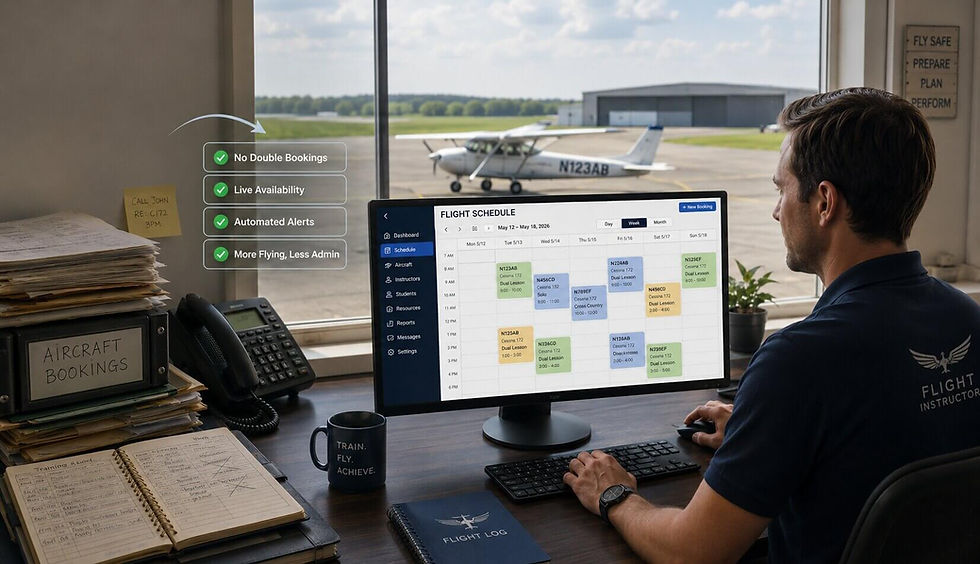
Start with availability. A school with too few aircraft for its student load means you wait, and waiting slows you down and raises your total cost. Ask how many training aircraft they have, how scheduling works, and how far ahead you need to book to fly as often as you want. A school that makes it easy to get on the schedule is one where you will actually finish.
Then look at the aircraft themselves. Well-maintained airplanes cancel fewer lessons.
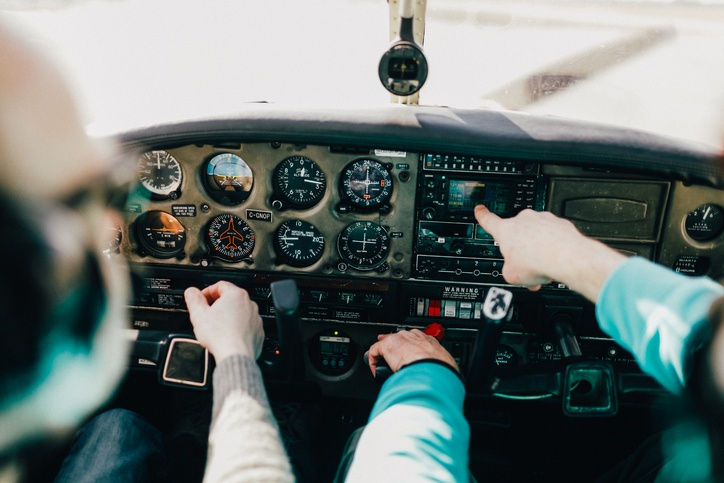
And pay attention to the avionics, because this is where a lot of new students get confused. Modern training aircraft usually have a glass cockpit, which means the instruments are digital displays, like the Garmin G1000, instead of the traditional round analog dials known as steam gauges. Neither is better for learning in any absolute sense. Some instructors prefer starting on steam gauges so you learn the fundamentals without leaning on automation, while others train on glass from day one because that is what you will fly later. What matters is knowing what you will train on and that it fits where you are headed.
Ask about simulators and training devices
Simulators are one of the easiest ways to keep costs down. FAA-approved training devices let you practice procedures and, within the limits set by the regulations, log certain training at a lower hourly rate than the aircraft. They are especially valuable for instrument training. Ask whether the school has one and how it fits into the syllabus. Used well, sim time means you spend your aircraft hours flying instead of figuring out what to do next.
Visit in person and bring questions
A tour tells you more than any website. Bring a short list and ask it directly:
Do you train under Part 61, Part 141, or both?
What does a typical student spend, all in, to reach a private certificate here?
How many aircraft do you have, and how easy is it to get on the schedule?
How do you handle it if my instructor leaves mid-training?
Do you have simulators, and how do you use them?
Can I talk to a current student before I decide?
The answers, and how willingly they are given, tell you a lot.
The bottom line
Learning to fly is within reach for far more people than attempt it. The ones who have the best experience are not the ones with the most money. They are the ones who sorted out their goal, their budget, and their school before enrolling, so they could spend their time and money flying instead of fixing avoidable problems. Take charge of the decision up front, and you will be in the air sooner. Fly safe.
Frequently asked questions
How much does it cost to get a private pilot license?
A private certificate commonly runs around $15,000 to $18,000 all in, though it varies widely by location, aircraft, and how often you fly. Total flight hours drive the cost, and the national average is closer to 60 to 75 hours rather than the FAA minimum, so flying consistently is the best way to keep the bill down.
Can I get a scholarship for flight school?
Yes. AOPA and EAA award flight training scholarships every year, and groups like Women in Aviation International and the Organization of Black Aerospace Professionals fund specific communities. Veterans can often use GI Bill benefits at a Part 141 school, and many schools offer financing or payment plans. Most scholarships require membership and run on seasonal deadlines, so apply early.
What questions should I ask a flight school before enrolling?
Ask whether they train under Part 61 or Part 141, what a typical student spends all in, how many aircraft they have and how easy it is to book one, how they handle instructor turnover, whether they have simulators, and whether you can speak with a current student.
Does it matter if I train in a glass cockpit or steam gauges?
Both work. A glass cockpit uses digital displays like the Garmin G1000, while steam gauges are traditional analog dials. Some instructors start students on steam gauges to build fundamentals, others train on glass because it is what you will fly later. Know what the school uses and make sure it fits your goals.
How long does it take to get a private pilot certificate?
It depends mostly on how often you fly. Students who fly several times a week can finish in a few months, while those who fly occasionally can take a year or more. Consistency matters more than anything, because long gaps mean relearning and more total hours.
PilotSchedule helps flight schools, flying clubs, and independent instructors keep their aircraft and CFIs easy to book, since 2003. When a school's scheduling runs smoothly, students fly more often and finish sooner.