How to Choose a Flight School: Military, Part 141, and Part 61

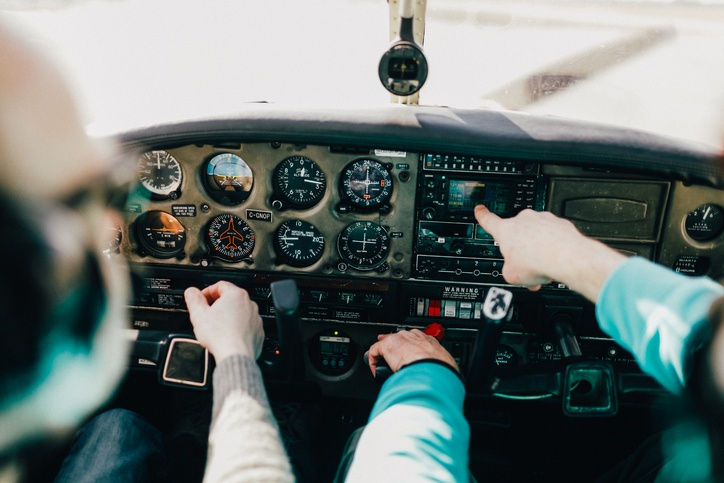
Every pilot starts in the same place. Whether you are booking your discovery flight or logging your ten-thousandth hour, it began at a flight school. The route you take to get your certificate, though, can look very different depending on the path you choose.
In the United States there are three main paths to becoming a pilot: military training, a Part 141 flight school, and Part 61 training. All three produce the same FAA certificate. The same written exams, the same checkrides, the same standards. What changes is the structure, the pace, the cost, and how well each one fits your life. Here is what separates them, and how to decide. If you're wondering how to choose a flight school, understanding the differences between military, Part 141, and Part 61 training is the best place to start.
The three paths at a glance
The names come straight from the rulebook. Part 61 and Part 141 are sections of Title 14 of the Code of Federal Regulations, the FAA's rules for aviation. Military training is its own world entirely. None of them is better than the others on paper. The right one depends on your goals, your schedule, and your budget.
Military flight training
Military training is the most structured and demanding path there is, and it comes with the most selective screening to get in. Most primary training happens inside military airfields and operating areas, so student aviators spend less time mixing with civilian traffic, control towers, and en route facilities than their civilian counterparts do.
That focus cuts both ways. A civilian-trained pilot may be better prepared for the busy, congested airspace around major metro areas, simply because they trained in it from day one. Rotorcraft is a good example: military helicopter training produces instrument-rated pilots, but most of the flying those pilots do in their careers is under visual flight rules, and a fair amount of the instrument work is closer to following a road than shooting an approach.
None of that takes anything away from the training itself. The instruction, the equipment, and the missions you fly in the military often have no equal in the civilian world. For people who want to serve and fly some of the most capable aircraft on the planet, it is a path with opportunities you cannot get anywhere else. The catch is the commitment. You do not simply enroll, and the service obligation that comes after training is real.
Part 141: the structured path
A Part 141 school is the one most people picture when they imagine flight training. It works a lot like a college program. The FAA reviews and approves the school's entire training course outline, so the syllabus, the lesson sequence, and the facilities all meet a standard the agency has signed off on. Students move through set milestones and have to pass stage checks, which are internal proficiency evaluations, before they can advance.
That oversight is the whole point, and it earns the school a real benefit: the FAA lets Part 141 programs certify pilots in fewer minimum flight hours, because a standardized curriculum produces more predictable results. The agency trusts the system. The hour difference is modest for a private certificate (35 hours instead of 40), and most students fly well past either minimum anyway. Where it matters is the commercial certificate, where Part 141 can get you to a checkride in 190 hours instead of 250. At typical rental and instruction rates, that gap can mean real money saved, as long as you train efficiently enough to finish near the minimum.
Part 141 also opens doors that Part 61 does not. Veterans using GI Bill benefits and international students on M-1 visas generally have to train under Part 141. If you are serious about aviation as a career and you learn well with heavy structure, this is usually the better fit.
Part 61: the flexible path
Part 61 is the path for the person who wakes up one day, decides they are finally going to chase the dream, and has a job and a family to work around. There is no FAA-approved curriculum and no fixed sequence. Any certificated flight instructor can train you, at your airport, in an aircraft that meets the requirements. You generally pick your instructor, set your own pace, and fly on your own schedule.
That flexibility is the strength, and also the thing to watch. With no school-level structure, the quality of your training leans heavily on the quality of your instructor, so choosing the right CFI matters more here than anywhere else.
Do not read "flexible" as "less serious." Some of the finest pilots you will ever meet trained entirely under Part 61. The performance standards are identical to a Part 141 school. The only thing that varies is the road you take to meet them. For recreational pilots, weekend students, and anyone who needs to start and stop around real life, Part 61 is hard to beat.
Part 141 vs Part 61, side by side
Part 61 | Part 141 | |
Private pilot minimum | 40 flight hours | 35 flight hours |
Instrument rating | 40 hours instrument plus 50 hours cross-country PIC | 35 hours instrument (cross-country built into the syllabus) |
Commercial minimum | 250 flight hours | 190 flight hours |
Structure | Flexible, instructor sets the plan | FAA-approved syllabus, set milestones |
Pace | Your own | Generally faster, geared to full-time study |
FAA oversight | Instructor follows the regs | School is audited, stage checks, approved course outline |
GI Bill / VA benefits | Generally not eligible | Eligible |
International (M-1 visa) students | Usually not | Yes |
Best fit | Career-and-family students, hobbyists, irregular schedules | Career-track pilots, immersive full-time training |
A useful note on those hour numbers: the national average for a private certificate runs closer to 60 to 75 hours no matter which part you train under. So the 35 versus 40 difference rarely shows up in practice for a private pilot. The savings are real at the commercial level, and only if you fly often enough to stay sharp.
One more practical point. You can switch paths mid-training. Moving from Part 141 to Part 61 is easy, and your logged hours all carry over. Going the other direction is messier, because a Part 141 school may need you to repeat parts of its approved syllabus. A common move is to start under Part 141 for the structure and the reduced hours, then drop to Part 61 with your hours intact if life makes the full-time pace hard to keep.
How to Choose a Flight School: Which Path Is Right for You?
A few questions usually settle it:
Do you want to serve and fly the most advanced aircraft available, and can you take on the commitment that comes with it? Look hard at the military path.
Are you aiming at aviation as a career, do you thrive on structure, or do you need GI Bill or M-1 visa eligibility? A Part 141 school is probably your fit.
Do you have a job, a family, or an irregular schedule, and do you want to fly for the love of it or build toward a career at your own pace? Part 61 was made for you.
There is no wrong answer here, only the one that fits your situation.
What every path has in common
Whatever route you take, the destination is identical. The same checkride, the same standards, the same responsibility once you are pilot in command. And the learning never really stops. Every pilot was a brand new student once, and the best ones keep treating themselves like students for the rest of their flying lives. Fly safe.
Frequently asked questions
Is Part 61 or Part 141 better?
Neither is better. They lead to the same certificate with the same standards. Part 141 suits structured, career-focused training. Part 61 suits flexible, self-paced training. The right one depends on your goals and schedule.
How many hours do you need to become a pilot?
The FAA minimum for a private certificate is 40 hours under Part 61 and 35 under Part 141, but the national average is closer to 60 to 75 hours regardless of path. For a commercial certificate the minimums are 250 hours under Part 61 and 190 hours under Part 141.
Can I switch from Part 61 to Part 141?
Yes, you can switch either way. Going from Part 141 to Part 61 is simple and all your hours carry over. Going from Part 61 to Part 141 can require repeating parts of the school's approved syllabus.
Do I have to join the military to become an airline pilot?
No. Most airline pilots train through civilian Part 141 or Part 61 programs. Military training is one path among several, not a requirement.
Does a Part 61 certificate count the same as a Part 141 one?
Yes. There is no difference in the certificate itself. A private pilot certificate is a private pilot certificate, whether you earned it under Part 61 or Part 141.
PilotSchedule has helped flight schools, flying clubs, and independent instructors keep their aircraft and CFIs organized since 2003, whichever training path they run.