Preflight Inspections: Why Thorough Always Beats Routine


Every student pilot learns the preflight walkaround early, and learns that it matters. The preflight is almost as important as the flying itself. The danger is not that pilots skip it. The danger is that it becomes routine, a set of motions you go through without really looking. This is why thoroughness matters every single time, and why one of the most respected names in Nebraska football is part of how some of us think about it.
Preflight Inspection: The Walkaround That Should Never Become Routine
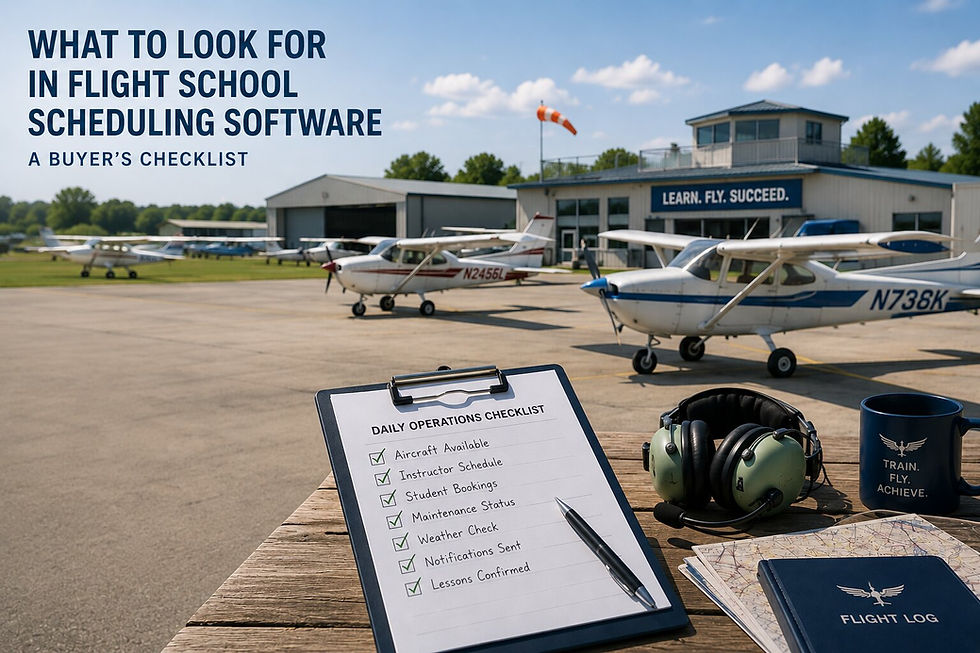
A preflight usually starts at a cabin door and works around the aircraft in one direction, checking the flight control surfaces, fuel quantity, oil, tires and brakes, the stall warning, lights, the skin and structure, the engine, and a long list of other items. There are so many of them that the right tool is a written checklist.
The honest truth is that a lot of pilots stop using the list once an aircraft feels familiar. That is exactly the wrong instinct. One of the biggest reasons aviation is so safe, and airline flying in particular, is relentless checklist discipline. Crews run checklists for nearly every phase of flight, not because they have forgotten how to fly, but because memory is the first thing that fails under habit and distraction. A checklist does not care how experienced you are. It catches the item you would have skipped.
So make every preflight a real inspection. Do not leave anything out, and do not let it slide into going through the motions. The thing you are really checking is your own attitude toward the process.
A hard lesson: the Brook Berringer accident
Most pilots rarely hear about an accident traced back to an incomplete preflight. It happens more than you would think, and one example has stayed with a lot of people.
Brook Berringer was a backup quarterback for the University of Nebraska in the mid-1990s. When the starter went down with an injury during the 1994 season, Berringer stepped in and helped lead the Cornhuskers through an undefeated run, part of back-to-back national championship teams. He came from a flying family, earned his private pilot certificate, and by the spring of 1996 had logged around 125 hours. He was 22, had just graduated, and was widely expected to be picked in the upcoming NFL draft.
On April 18, 1996, he borrowed a friend's 1946 Piper J-3 Cub, a classic two-seat taildragger, from a private grass airstrip near Raymond, Nebraska. With him was Tobey Lake, the brother of Berringer's girlfriend and an experienced pilot in his own right, with a commercial rating and roughly 210 hours. With two adults aboard, the little Cub was near its maximum weight, and it was a windy day, around 20 miles per hour gusting to nearly 30. They did a preflight, taxied out, ran up the engine, and took off. Everything looked normal.
At about 250 feet, the 65-horsepower engine lost power. At that altitude, fully loaded, the survivable move is to lower the nose, hold airspeed, and land mostly straight ahead. But there is a powerful, almost reflexive pull to turn back toward the runway you just left, and at low altitude that instinct is deadly. Berringer tried to turn back. The loaded Cub, in gusty wind, stalled and went into the field. Both men were killed. It was two days before the 1996 NFL draft, where his name was expected to be called.
The National Transportation Safety Board investigated and reached its conclusions in about nine months. The probable cause was a fuel valve that was not fully open. The selector was found just short of the full "on" position. At idle, taxi, and run-up, the partly open valve fed enough fuel to run normally. But at full throttle on takeoff, the engine demanded more than the restricted line could deliver, and it died from fuel starvation, that classic and entirely preventable killer. The Board also cited the failure to maintain control of the aircraft, meaning the turn back, and the gusty winds as contributing factors.
Two lessons that could have changed the outcome
This accident teaches two things, and they stack on top of each other.
First, the ground is where you catch a fuel problem. A preflight and a careful run-up are the last chances to find exactly this kind of fault before it matters. A fuel selector sitting just shy of fully open is precisely what a deliberate, item-by-item check exists to catch. It is also a reminder to know the specific aircraft you are flying. A borrowed or unfamiliar airplane deserves more care, not less, because its switches and controls may not behave the way you expect. Reports later noted that this Cub's fuel control was easy to misread, which only sharpens the point: verify the system, do not assume it.
Second, after a low-altitude engine failure, resist the turn back. This is so common and so fatal that flight instructors have a name for it: the impossible turn. Below a certain altitude there simply is not enough height to reverse course without losing control, especially in a steep, slowing turn where the stall speed climbs. The choice that gives you the best odds is almost always to keep flying the airplane, lower the nose to hold airspeed, and put it down within a narrow cone straight ahead, even into a rough field.
Aviation safety instructors who reviewed this accident said the same thing: straight and level gives you a real chance, while the turn invites a stall-spin you cannot recover from that low.
Build the discipline before you need it
You cannot make good decisions at 250 feet that you have not already made on the ground. A few habits stack the odds in your favor:
Use a written checklist on every preflight, even on an aircraft you know by heart.
Treat any borrowed or unfamiliar aircraft with extra caution. Confirm the fuel system, switch positions, and configuration yourself.
Brief your engine-failure plan out loud before every takeoff. Decide now that if the engine quits on climb-out, you will land ahead. Make that decision on the ramp, not in the air.
Do not let weight, weather, and a hurried schedule pile up against you. A windy day at gross weight off a short strip leaves no margin for a missed item.
The bottom line
The hardest part of this story is that Berringer was not careless. He came from aviation, held his certificate, and had a more experienced pilot sitting beside him. Capable, decent people are not exempt from the consequences of one missed item and one understandable but fatal instinct. That is the whole reason a thorough preflight and a pre-briefed plan are worth the few extra minutes. Treat every inspection like it is the one that matters, because you will not know in advance which one is. Fly safe.
Frequently asked questions
What does a preflight inspection check?
A preflight covers the flight control surfaces, fuel quantity and the fuel system, oil, tires and brakes, the stall warning, lights, the airframe and skin, the engine, and many smaller items. Because the list is long, pilots should use a written checklist rather than relying on memory.
Why are checklists so important in aviation?
Checklists catch the item habit and distraction would cause you to skip. Disciplined checklist use is one of the main reasons airline flying is so safe. Experience does not replace a checklist, because the most familiar tasks are the easiest to perform on autopilot and get wrong.
What caused the Brook Berringer plane crash?
The NTSB found the probable cause was a fuel valve that was not fully open, which caused fuel starvation and engine failure during the initial climb. The pilot's failure to maintain control after the engine quit, specifically an attempt to turn back, and gusty winds were contributing factors.
What is the "impossible turn"?
It is the attempt to turn back to the runway after an engine failure shortly after takeoff. Below a certain altitude there is not enough height to complete the turn without losing control, so the maneuver often ends in a stall-spin. It is taught as something to avoid precisely because the instinct to do it is so strong.
What should you do if your engine fails right after takeoff?
In most light aircraft the safest response at low altitude is to lower the nose to maintain airspeed and land roughly straight ahead, within a narrow cone either side of your heading, even on unfavorable terrain. Briefing this plan before each takeoff makes the right choice automatic when seconds matter.
PilotSchedule has supported flight schools, flying clubs, and independent instructors since 2003.