Flight School No-Show and Cancellation Policy: A Framework That Actually Gets Followed


A student books a 3 p.m. lesson on Thursday. At 2:45 he texts the instructor: something came up, can't make it. The instructor already turned down another student's request for that slot two days ago. The airplane sits, the instructor gets paid for an hour of nothing or doesn't get paid at all depending on how the school handles it, and the cancellation policy buried in the student handbook never actually touched what just happened, because nobody checked it against the booking before it went out.
Every flight school has a cancellation policy on paper. Fewer have one that the schedule actually enforces, which is the only version that changes behavior.
Why the handbook version doesn't work on its own
A policy that lives in a PDF or a page students sign once during enrollment is a statement of intent, not a working rule. It depends on someone remembering to apply it in the moment, which is exactly when it's least convenient to enforce: the student is apologetic, the instructor doesn't want the awkward conversation, and the front desk waives the fee because arguing over $50 isn't worth the ill will. Multiply that by every late cancellation over a season and the school has quietly trained its own students that the policy is optional.
What a Cancellation Policy Needs to Actually Say
A cancellation policy that holds up needs to answer four questions without ambiguity:
How much notice counts as on-time? Twenty-four hours is common, but the number matters less than picking one and applying it consistently.
What happens inside that window? A flat no-show fee, a percentage of the lesson rate, or forfeiture of a pre-paid block. Vague language like "a fee may apply" invites a negotiation every time.
Does weather get an exception? It should, but the exception needs a definition (a canceled instructor-side flight due to ceiling or crosswinds) rather than a case-by-case judgment call that changes with who's at the desk.
Who enforces it? If the answer is "whoever is working the front desk that day," the policy will be applied inconsistently by design. It needs to be a system rule, not a personal one.
Where the enforcement actually has to live
The reason handbook policies drift is that they're disconnected from the one place a cancellation actually happens: the booking screen. A policy the schedule doesn't know about depends entirely on a human catching every case, which is the same failure mode as a backup reservation list run off memory instead of the calendar.
A few things fix this at the schedule level rather than the handbook level:
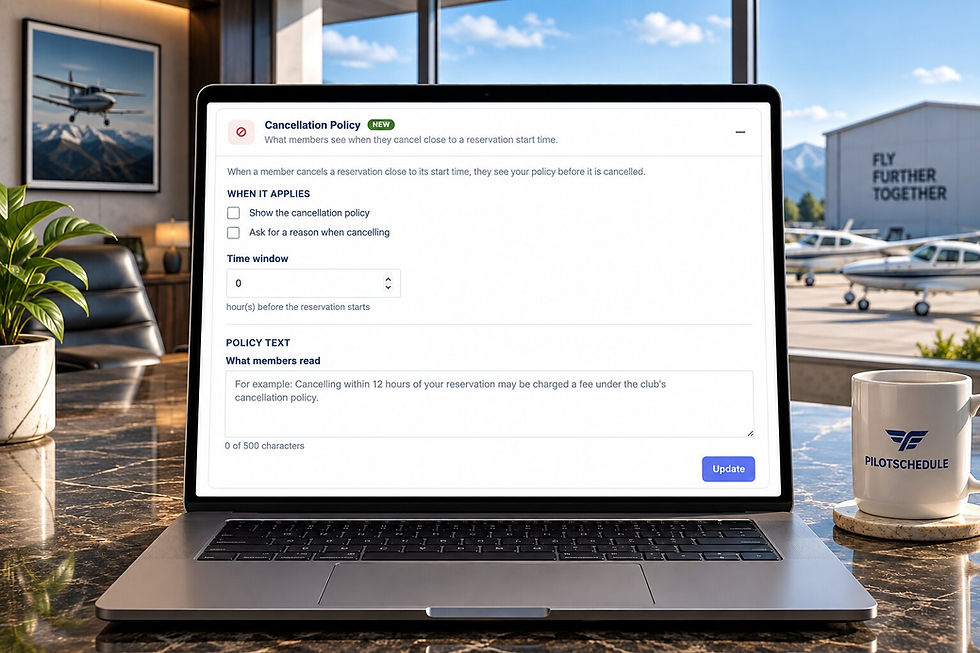
A defined cancellation window built into the booking rules, so a same-day cancellation is flagged automatically instead of relying on someone doing the math on a calendar.
A visible no-show record on the student's own history, so a pattern shows up after the second or third time instead of staying invisible until an instructor happens to mention it.
A grace period before a no-show slot releases, so an instructor isn't left holding a booked hour with no way to recover it if a backup pilot could have taken it.
The part that's actually about instructor time, not student behavior
It's easy to frame a cancellation policy as a discipline tool aimed at students. The more useful frame is that it protects instructor time, which is the actual scarce resource in most schools. An instructor who gets canceled on at 2:45 for a 3 p.m. slot has lost an hour of paid work they can't get back that day, whether or not the student pays a fee. The policy's real job is making that loss rare enough, and visible enough when it happens, that it doesn't quietly become the instructor's problem to absorb every week.
How PilotSchedule supports this
PilotSchedule doesn't write your cancellation policy for you, that's a business decision for the school, but the scheduling rules are where the policy gets teeth. Booking windows, advance-notice requirements, and reservation history are part of the standard calendar, so a same-day cancellation is visible on the record rather than living only in a text thread. Backup reservations mean a canceled slot doesn't have to sit empty even while the fee conversation happens separately. What PilotSchedule doesn't do is collect the fee itself, that still runs through whatever payment or billing process the school already has.
Setting it up
Pick one cancellation window and one fee or forfeiture rule, and write it in plain language, not "fees may apply."
Define the weather exception in advance, tied to a specific condition rather than a judgment call.
Set the matching advance-notice rule in the schedule so the system flags a late cancellation the same way every time.
Put the policy where students see it before they book, not just in a handbook they sign once.
Review the no-show history after the first full term and see whether the window or the fee needs adjusting.
Frequently asked questions
How much cancellation notice should a flight school require?
Twenty-four hours is standard across most schools, though some run shorter windows for high-demand aircraft. The specific number matters less than committing to one and applying it the same way every time.
Should weather cancellations be exempt from the fee?
Most schools exempt them, but the exemption needs a clear definition, tied to conditions that would have grounded the instructor's side of the flight too, rather than being decided case by case at the desk.
How do we stop the policy from being waived informally?
Build the rule into the booking system itself so it flags automatically, rather than depending on whoever is at the desk to remember and enforce it under social pressure.
Does PilotSchedule handle the cancellation fee billing?
No. PilotSchedule enforces the scheduling side, booking windows, no-show visibility, and backup reservations, but fee collection runs through the school's existing payment process.
The bottom line
A cancellation policy only works if it's the same rule every time, applied by the schedule rather than by whoever happens to be at the desk when someone cancels. See how booking rules and backup reservations work inside PilotSchedule or create a free club and set your cancellation window as part of the schedule itself.